
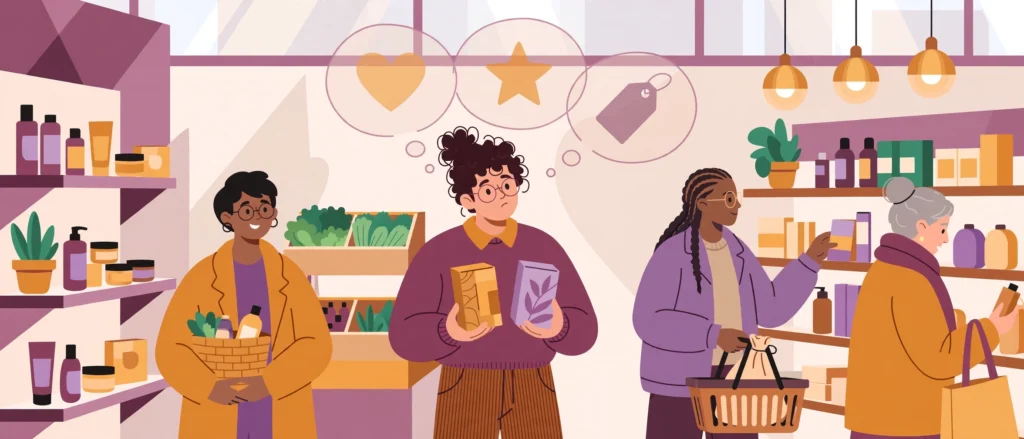
Consumer behavior is the study of how people choose, buy, use, and let go of products and services — and why. In marketing, it answers the question underneath every campaign: what is actually going on in the customer’s mind when they decide? Businesses that understand consumer behavior stop guessing. They design offers, prices, messages, and shopping experiences around how people really decide, which is rarely how people say they decide. This guide covers the key ideas, clear everyday examples, and the careers that use this skill.
The core ideas behind consumer behavior
Perception. Customers do not see your product the way you do. Packaging, wording, price, and first impressions filter everything. Two identical products can feel completely different depending on how they are presented.
Motivation and needs. People buy outcomes, not objects — safety, status, convenience, belonging, relief from a problem. Good marketing connects the product to the outcome the customer already wants.
Social influence. Reviews, ratings, recommendations, and what “people like me” are doing shape decisions powerfully. It is why testimonials sit next to prices and why bestseller labels work.
Mental shortcuts. Under time pressure, people use rules of thumb: the middle-priced option feels safest, a struck-through “original price” makes a deal feel real (anchoring), and scarce items feel more valuable (scarcity). Marketers who understand these shortcuts use them honestly to make decisions easier — and can also spot when they are being used on them.
Culture, habits, and identity. Where someone lives, what their community values, and how they see themselves all steer buying in ways no discount can override. Brands that fit a customer’s identity get loyalty that price promotions cannot buy.
Everyday examples you have already seen
- Free-shipping thresholds. “Free shipping over $50” exists because customers would rather add an item than pay a fee — a predictable quirk of how people weigh small losses.
- The three-option menu. A basic, standard, and premium version of the same product makes the middle feel like the sensible choice; the premium option’s real job is often to make the middle look reasonable.
- Reviews above the fold. Stores place star ratings next to the buy button because social proof answers the customer’s silent question — “did this work for people like me?” — at the exact moment of decision.
- Loyalty programs. Points and tiers work because progress feels valuable. People buy more to finish a level they have started, even when the reward is small.
- Defaults. Pre-selected options — from subscription renewals to charity add-ons at checkout — are chosen far more often than ones customers must actively select.
None of this is magic. Each example is a business designing around a documented pattern in how humans decide.
Careers that use consumer behavior
Consumer behavior is a supporting skill in almost every marketing career, and the center of the job in several:
- Marketing strategist — uses customer insight to decide positioning, messaging, and channels
- Brand manager — shapes how a product is perceived and what it stands for
- Market research analyst — studies customers directly through surveys, interviews, and data
- UX researcher — examines how people actually use websites and products, and where they get stuck
- Copywriter and content marketer — writes to real motivations instead of features
- E-commerce and retail managers — apply pricing, layout, and promotion psychology daily
In each case, the professionals who advance fastest tend to be the ones who can explain why customers do what they do, not just what the sales numbers were.
How to learn it
Consumer behavior rewards structured study, because the ideas build on each other: perception and motivation first, then social and cultural influences, then how they combine in real purchase decisions. Working through examples and case studies — and applying the concepts to products you buy yourself — is what turns interesting trivia into a job skill you can use in interviews and on the job.
Study consumer behavior with IvyBright
IvyBright’s Consumer Behavior course covers how customers perceive, decide, and buy — with practical exercises and case studies that connect the psychology to real marketing decisions. It is self-paced, includes weekly live Q&A sessions, and comes with a certificate of completion. The course costs $199. IvyBright is a US 501(c)(3) nonprofit and is ACS WASC-accredited. If you want marketing skills grounded in how people actually decide, this is the course that builds them.